
Listen to this Article:
A Breath of Sanity in a Chaotic World
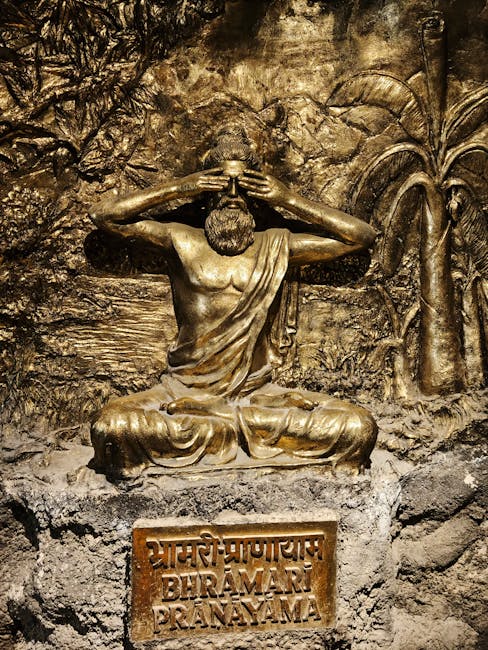
As I sit in stillness, surrounded by the trappings of our modern world, I am reminded of the timeless wisdom of the Bhagavad Gita, that ancient text that has guided seekers for centuries. In its verses, I find solace and guidance for navigating the complexities of our daily lives. The Gita speaks of the importance of cultivating inner peace, of finding a sense of calm amidst the turmoil that often characterizes our modern existence. One of the most effective ways to achieve this state of serenity is through the practice of pranayama, a term that roughly translates to “the extension of life force” or “the regulation of breath.” In Sanskrit, the word “prana” refers to the vital energy that animates our bodies, while “yama” means to control or regulate. By learning to breathe consciously, we can tap into this life force, quieting the mind and soothing the nervous system.
As we navigate the demands of our careers, relationships, and daily responsibilities, it’s easy to become disconnected from our inner selves. We may feel like we’re drowning in a sea of anxiety, our minds racing with worries about the future or regrets about the past. But what if I told you that there is a way to calm the waves of your mind, to find a sense of peace that is always available, no matter what challenges you may be facing? This is the promise of pranayama, a practice that has been used for centuries to quiet the mind, balance the emotions, and awaken the spirit.
The Ancient Roots of Pranayama
The practice of pranayama has its roots in ancient India, where it was considered an essential component of yoga. The yoga tradition, as described in the Puranas, emphasizes the importance of balancing the body, mind, and spirit through various practices, including postures, meditation, and breath control. By regulating the breath, practitioners of yoga sought to quiet the mind, awaken the inner self, and experience a deeper sense of connection to the universe. In the Bhagavad Gita, Krishna teaches Arjuna about the importance of self-control, including control over the breath, as a means of achieving inner peace and spiritual awareness.
As I reflect on my own journey, I realize that pranayama has been a constant companion, a source of comfort and guidance in times of stress and uncertainty. By incorporating these simple yet powerful techniques into my daily routine, I have found that I am better able to navigate the challenges of modern life, staying grounded and centered even in the midst of chaos. And it’s not just about feeling more relaxed or focused – although those are certainly benefits of the practice. It’s about cultivating a deeper sense of awareness, a sense of connection to my own inner wisdom and to the world around me.
The Science of Breath
From a scientific perspective, pranayama works by influencing the autonomic nervous system, which regulates our body’s automatic functions, such as heart rate, blood pressure, and respiration. When we’re under stress, our nervous system goes into “fight or flight” mode, causing our heart rate and blood pressure to increase, and our breathing to become shallow and rapid. By practicing pranayama, we can calm the nervous system, slowing down our heart rate, lowering our blood pressure, and promoting a sense of relaxation and calm. This, in turn, can have a positive impact on our overall health and well-being, reducing stress, improving sleep, and boosting our immune system.
In addition to its physical benefits, pranayama also has a profound impact on our emotional and spiritual well-being. By regulating the breath, we can influence our emotional state, quieting the mind and promoting a sense of inner peace. This is particularly important in today’s fast-paced world, where stress and anxiety are rampant. By incorporating pranayama into our daily routine, we can develop greater resilience, better coping mechanisms, and a deeper sense of connection to ourselves and the world around us.
Pranayama in Practice
So, how can you begin to incorporate pranayama into your daily life? Start by finding a quiet, comfortable place to sit, where you can focus on your breath without distraction. Close your eyes and take a few deep breaths, feeling the air move in and out of your body. Begin to notice the sensation of the breath, the way it feels as it enters and leaves your nostrils. As you inhale, imagine that you are drawing in fresh, vital energy, filling your body and mind with calm and clarity. As you exhale, imagine that you are releasing any tension, stress, or anxiety, letting go of anything that no longer serves you.
One of the simplest and most effective pranayama techniques is alternate nostril breathing. To practice this, use your right hand to close your right nostril, and inhale through your left nostril. Then, close your left nostril with your ring finger, and exhale through your right nostril. Inhale through your right nostril, close it with your thumb, and exhale through your left nostril. This process is repeated, alternating nostrils with each breath. This technique helps to balance the breath, calm the nervous system, and promote a sense of inner peace.
Another powerful technique is the 4-7-8 breath, also known as the “relaxation breath.” To practice this, inhale through your nose for a count of four, filling your lungs completely. Hold your breath for a count of seven, feeling your body relax and your mind calm. Exhale through your mouth for a count of eight, releasing any tension or stress. This technique can be practiced at any time, whether you’re feeling stressed, anxious, or simply need to relax and unwind.
Cultivating Inner Peace
As you explore the practice of pranayama, remember that it’s not just about the techniques themselves, but about the state of mind they help you cultivate. Pranayama is a tool for quieting the mind, awakening the inner self, and experiencing a deeper sense of connection to the world around you. By incorporating these practices into your daily routine, you can develop greater awareness, clarity, and inner peace, even in the midst of chaos.
In the Bhagavad Gita, Krishna teaches Arjuna about the importance of cultivating a sense of detachment, of letting go of our attachment to the external world and focusing on the inner self. This is the key to true freedom, he says, the key to experiencing a sense of peace and fulfillment that is not dependent on external circumstances. By practicing pranayama, we can begin to develop this sense of detachment, letting go of our worries, fears, and anxieties, and focusing on the present moment.
A Final Thought for the Day
As I sit in stillness, reflecting on the wisdom of the Bhagavad Gita and the power of pranayama, I am reminded of the importance of cultivating inner peace in our daily lives. In a world that is increasingly fast-paced and chaotic, it’s easy to get caught up in the external drama, to lose sight of what’s truly important. But by incorporating pranayama into our daily routine, we can develop greater resilience, better coping mechanisms, and a deeper sense of connection to ourselves and the world around us. So, take a deep breath in, feeling the air fill your lungs, and exhale slowly, letting go of any tension or stress. Remember, the power to create peace and tranquility is within you, waiting to be tapped. May you walk in peace, my friend, and may your heart be filled with love, light, and wisdom.