Listen to this Article:
Ancient Wisdom for Modern Souls
As we navigate the complexities of our modern lives, it’s easy to get lost in the chaos of our daily routines. We find ourselves questioning our purpose, our relationships, and our overall sense of fulfillment. It’s in these moments of uncertainty that we may turn to ancient wisdom for guidance. For thousands of years, the Vedic tradition has offered a profound understanding of the human experience, and one of its most powerful tools is Nakshatra astrology. This sacred science of the stars has been used by sages and seers to understand the intricate dance between our inner and outer worlds.
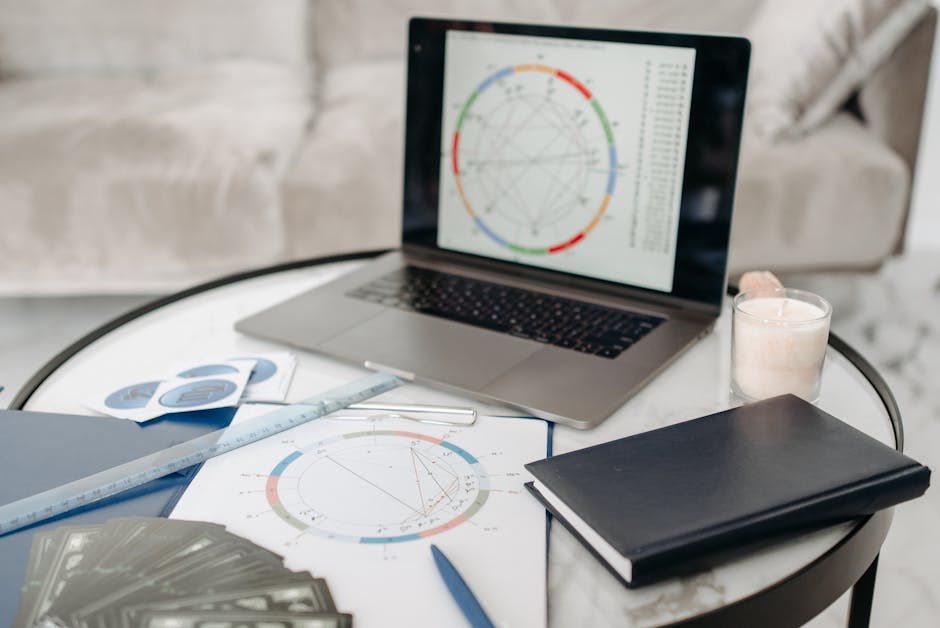
At its core, Nakshatra astrology is based on the idea that our birth chart is a unique map of our soul’s journey. It’s a celestial blueprint that outlines our strengths, our weaknesses, and our deepest desires. By understanding our Nakshatra, or lunar mansion, we can gain insight into our emotional patterns, our relationship dynamics, and our overall life path. The Bhagavad Gita, that revered Divine Book, reminds us that we are not just our physical bodies, but sparkles of the divine, imbued with a deep sense of purpose. As the Gita so eloquently puts it, “You are not just a drop in the ocean, you are the entire ocean in a drop.”
The Language of the Stars
To truly grasp the beauty of Nakshatra astrology, we must first understand the language of the stars. In Sanskrit, the word “Nakshatra” means “that which does not decay,” implying a sense of timelessness and eternity. Each Nakshatra is associated with a particular set of energies, known as “gunas,” which influence our thoughts, emotions, and actions. The three gunas are sattva, rajas, and tamas, which can be roughly translated as harmony, passion, and inertia. By recognizing the dominant guna in our Nakshatra, we can better understand our motivations, our emotional patterns, and our relationship with the world around us.
For example, someone with a strong sattvic influence in their chart may be naturally drawn to spiritual pursuits, creative expression, and meaningful relationships. On the other hand, an individual with a predominantly rajasic influence may be more driven, ambitious, and outgoing, but also more prone to stress and burnout. The Puranas, those ancient Vedic texts, tell us that our birth chart is a reflection of our past life experiences, and that our current life is an opportunity to heal, grow, and evolve.
Embracing Our Inner World
As we delve into the mysteries of Nakshatra astrology, we begin to realize that our inner world is intimately connected to the outer world. Our emotions, our thoughts, and our desires are all influenced by the celestial bodies that surround us. The moon, in particular, plays a crucial role in shaping our emotional landscape. In Sanskrit, the word “chandra” means “moon,” and it’s associated with the feminine, receptive, and nurturing aspects of our psyche. By tuning into the lunar cycles, we can better understand our emotional ebbs and flows, and learn to cultivate a deeper sense of self-awareness and self-compassion.
This is especially important in today’s fast-paced world, where anxiety, stress, and burnout have become ubiquitous. By recognizing the lunar influence on our emotions, we can begin to develop more effective coping strategies, and learn to navigate the challenges of our modern lives with greater ease and resilience. As the Bhagavad Gita reminds us, “The mind is the friend of the one who has conquered it, and the mind is the enemy of the one who has not.” By embracing our inner world, and cultivating a deeper understanding of our emotions and desires, we can begin to harness the power of our minds, and live more authentic, meaningful lives.
Relationships and the Cosmic Dance
Nakshatra astrology also offers profound insights into our relationships, and the delicate cosmic dance that unfolds between two individuals. In Sanskrit, the word “yoga” means “union,” and it refers to the harmonious blending of two energies. When we meet someone with a complementary Nakshatra, we may experience a deep sense of connection, mutual understanding, and emotional resonance. This is because our lunar mansions are attuned to each other, like two instruments playing in harmony.
However, relationships can also be a catalyst for growth, transformation, and healing. When we encounter someone with a Nakshatra that challenges our own, we may experience conflict, tension, and emotional upheaval. This is not necessarily a bad thing, as it can prompt us to confront our own shadow, and work through unresolved patterns and wounds. The Puranas tell us that our relationships are a reflection of our own inner world, and that the people we attract into our lives are a mirror of our own soul’s journey.
Embracing the Mystery
As we explore the mysteries of Nakshatra astrology, we begin to realize that our lives are not just a product of our individual efforts, but also a part of a larger cosmic plan. The stars, the planets, and the lunar cycles all play a role in shaping our destiny, and guiding us towards our highest potential. This is not to say that we are mere puppets of fate, but rather that we are active participants in a grand adventure, with the power to choose, to create, and to evolve.
In the end, Nakshatra astrology is not just a tool for predicting our future, but a sacred guide for navigating our present. It reminds us that we are not alone in this vast universe, but connected to a web of energies, a cosmic tapestry that weaves together the threads of our individual lives. As we gaze up at the starry night sky, we are reminded of the infinite possibilities that lie before us, and the boundless potential that awaits us on our journey of self-discovery and growth.
As the sun sets on another day, and the stars begin to twinkle in the evening sky, let us take a moment to reflect on the wisdom of the ages. Let us remember that we are part of a larger whole, a universe that is full of mystery, wonder, and magic. And as we drift off to sleep, surrounded by the silence of the night, let us hold dear the final thought for the day: that we are not just human beings, but celestial beings, shining bright like stars in the vast expanse of the cosmos.