
Listen to this Article:
Ancient Echoes of the Feminine
As we navigate the complexities of modern life, it’s intriguing to explore the evolution of women’s roles in Indian mythology, particularly in the context of Hindu goddesses. The sacred stories of the Puranas and the timeless wisdom of the Bhagavad Gita, which we affectionately call ‘The Divine Book’, offer a profound understanding of the feminine principle. In Sanskrit, the language of these ancient texts, the word ‘shakti’ refers to the divine feminine energy that permeates the universe. It’s a term that embodies the dynamic, creative, and nurturing aspects of the feminine, which are essential for balance and harmony in our lives.
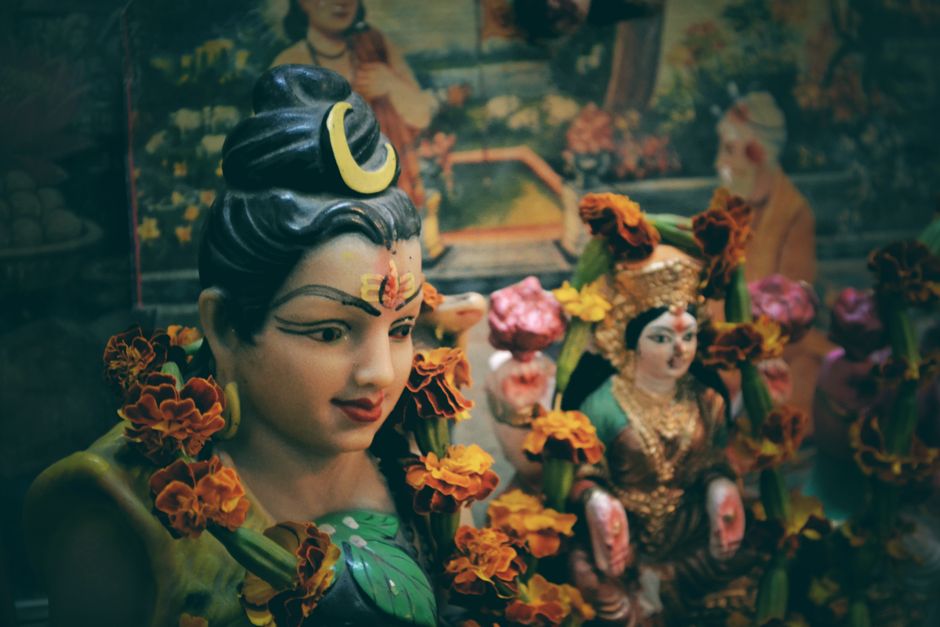
In the realm of Hindu mythology, goddesses like Durga, Kali, and Saraswati embody different facets of shakti. Durga, the fierce warrior, represents the courage and strength that lies within us, while Kali, the goddess of time and change, symbolizes the transformative power of the feminine. Saraswati, the goddess of knowledge and arts, personifies the creative and intellectual aspects of shakti. These goddesses are not just mere deities; they represent the archetypes of the feminine, which are deeply ingrained in our collective psyche.
As we reflect on the roles of these goddesses, we begin to see parallels with modern feminism. The struggle for women’s empowerment and equality is, in essence, a quest to reclaim and honor the feminine principle in all its forms. The Bhagavad Gita reminds us that true strength lies not in aggression or dominance, but in the gentle, yet unyielding, power of the feminine. In Chapter 2, Verse 56, Krishna says, “One who has controlled the mind and senses, and has realized the Self, is eligible to attain the state of supreme peace and liberation.” This verse hints at the importance of balancing our inner masculine and feminine energies, which is crucial for achieving harmony and fulfillment in our lives.
Embracing the Cycles of Life
The Puranas, a collection of ancient stories and legends, offer valuable insights into the lives of women in ancient India. These stories often revolve around the themes of love, family, and duty, which were considered essential aspects of a woman’s life. The concept of ‘dharma’, or righteous living, was deeply ingrained in the social fabric of ancient India. Dharma refers to the natural order of the universe, which is governed by the principles of harmony, balance, and reciprocity. In the context of women’s lives, dharma meant fulfilling one’s duties as a daughter, wife, mother, and member of society.
However, as we navigate the complexities of modern life, we begin to see that the notion of dharma has evolved. Women are no longer confined to traditional roles; they are now free to pursue their passions, careers, and interests. The Bhagavad Gita reminds us that our true dharma is to follow our inner calling, to listen to the whispers of our heart, and to align our actions with our deepest values. In Chapter 3, Verse 35, Krishna says, “It is better to perform one’s own duties imperfectly than to perform another’s duties perfectly.” This verse encourages us to stay true to ourselves, even as we navigate the demands of modern life.
As we explore the stories of Hindu goddesses, we begin to see that they, too, embodied the principles of dharma. They were not just passive recipients of their fate; they were active participants in shaping their own destinies. Durga, the fierce warrior, rode into battle on a lion, symbolizing her courage and determination. Kali, the goddess of time and change, danced on the corpse of her husband, Shiva, representing her power to transform and renew. These stories remind us that women have always been capable of embracing the cycles of life, of navigating the ebbs and flows of existence with grace and resilience.
Balancing the Inner Masculine and Feminine
As we journey through the realms of Indian mythology, we begin to see that the balance between the inner masculine and feminine is essential for achieving harmony and fulfillment in our lives. The Sanskrit term ‘yin’ and ‘yang’ is often used to describe this balance, where the masculine principle represents structure, logic, and action, while the feminine principle embodies receptivity, intuition, and nurturing. In the Bhagavad Gita, Krishna reminds us that we must balance our inner masculine and feminine energies to achieve spiritual growth and self-realization.
In modern times, this balance is more crucial than ever. As women, we are often expected to embody both masculine and feminine traits, to be strong and nurturing, logical and intuitive. The pressure to conform to societal expectations can be overwhelming, leading to anxiety, stress, and burnout. However, by embracing our inner feminine and masculine, we can begin to navigate these challenges with greater ease and grace. We can learn to listen to our intuition, to trust our instincts, and to balance our logical and creative selves.
The stories of Hindu goddesses offer a powerful reminder of this balance. Durga, the fierce warrior, was also a devoted mother and wife, embodying the nurturing aspects of the feminine. Kali, the goddess of time and change, was a fierce protector of her loved ones, representing the strength and courage of the feminine. These stories remind us that we, too, can embody different facets of the feminine, that we can be strong and gentle, logical and intuitive, all at the same time.
A Final Thought for the Day
As we reflect on the evolution of women’s roles in Indian mythology, we are reminded that the journey of self-discovery and empowerment is a lifelong path. The Bhagavad Gita and the Puranas offer us timeless wisdom, guiding us to balance our inner masculine and feminine energies, to listen to our intuition, and to trust our instincts. As we navigate the complexities of modern life, we can draw inspiration from the stories of Hindu goddesses, who embodied the principles of shakti, dharma, and balance.
As we close this conversation, I invite you to take a deep breath, to feel the gentle breeze of the feminine principle whispering within you. May you remember that you, too, are a embodiment of shakti, a dynamic, creative, and nurturing force in the world. May you trust your instincts, listen to your heart, and navigate the cycles of life with courage, grace, and resilience. And as the sun sets on this day, may you carry the wisdom of the ages with you, guiding you on your own journey of self-discovery and empowerment.