
Listen to this Article:
The Rhythm of the Goddess
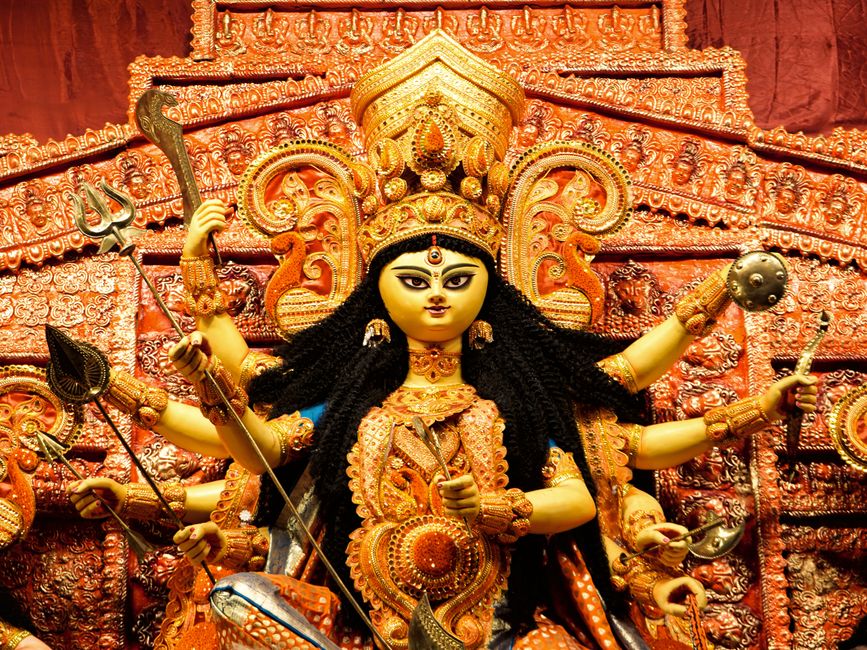
As the seasons change and the nights grow cooler, we find ourselves drawn to the vibrant celebrations of Navaratri, a joyous festival honoring the divine feminine. For nine nights, we immerse ourselves in the stories, rituals, and energies of the goddess incarnations, or avatars. This sacred time invites us to explore the mysteries of the feminine, to awaken our own inner strength, and to find balance in the midst of life’s chaos.
The Navaratri goddesses are embodiments of the divine feminine, each with her own unique qualities and energies. As we journey through these nine nights, we can tap into their wisdom, allowing their presence to guide us through life’s challenges. The Bhagavad Gita, an ancient Indian text, reminds us that the divine is present in every being, and that we can access this divine energy by cultivating a sense of inner peace and awareness.
The Goddess as a Symbol of Inner Wisdom
The Sanskrit term for goddess, _devi_, means “shining one” or “radiant being.” The goddesses of Navaratri represent various aspects of the self, guiding us toward wholeness and self-realization. As we explore their stories and symbolism, we begin to see that the goddess is not just an external deity, but a reflection of our own inner wisdom.
The first goddess, Shailputri, embodies the qualities of courage and determination. Her name, which means “daughter of the mountains,” reminds us of the strength and resilience that lies within us. As we navigate life’s challenges, we can call upon Shailputri’s energy to find the courage to take risks and pursue our passions.
The Dance of Creation: Brahmacharini and the Power of Intention
The second goddess, Brahmacharini, represents the power of intention and creativity. Her name, which means “one who walks the path of Brahman,” or the ultimate reality, inspires us to align our actions with our deepest values and aspirations. As we set intentions and work toward our goals, we can tap into Brahmacharini’s energy, allowing our creativity and passion to guide us.
In the Bhagavad Gita, we find the concept of _nishkama karma_, or selfless action. This idea encourages us to perform our actions without attachment to the outcome, allowing us to stay focused on our intentions and values. As we cultivate this mindset, we can embody Brahmacharini’s energy, bringing clarity and purpose to our endeavors.
The Radiance of Chandraghanta: Finding Inner Peace
The third goddess, Chandraghanta, shines with a radiant energy that calms the mind and soothes the heart. Her name, which means “one who wears the crescent moon,” reminds us of the peace and tranquility that lies within us. As we navigate life’s stress and anxiety, we can call upon Chandraghanta’s energy to find inner peace and calm.
In today’s fast-paced world, it’s easy to get caught up in the chaos of daily life. But as we cultivate mindfulness and presence, we can tap into Chandraghanta’s energy, allowing us to stay grounded and centered. The Puranas tell us that the goddess is the embodiment of compassion and loving-kindness. As we embody these qualities, we can bring more peace and harmony to our relationships and our world.
Kushmanda: The Cosmic Mother
The fourth goddess, Kushmanda, represents the cosmic mother, who brings forth life and nourishes all beings. Her energy reminds us of the interconnectedness of all things and the importance of honoring the natural world. As we cultivate a sense of gratitude and respect for the earth and its creatures, we can tap into Kushmanda’s energy, allowing us to live in greater harmony with the world around us.
The concept of _vasudhaiva kutumbakam_, or the world as one family, is a beautiful expression of this interconnectedness. As we recognize our place within the larger web of life, we can embody Kushmanda’s energy, bringing more compassion and care to our relationships and our world.
The Fierce Love of Skandamata
The fifth goddess, Skandamata, embodies the fierce love and protection of a mother. Her energy reminds us of the importance of setting boundaries and taking care of ourselves. As we navigate life’s challenges, we can call upon Skandamata’s energy to find the courage to stand up for ourselves and to prioritize our own well-being.
In the Bhagavad Gita, we find the concept of _ahaṃ mamatā_, or the ego’s sense of ownership. As we cultivate a sense of detachment and self-awareness, we can transcend this egoic sense, allowing us to embody Skandamata’s energy and to find greater freedom and empowerment.
The Wisdom of Katyayani
The sixth goddess, Katyayani, represents the wisdom and discernment that comes from a deep understanding of the self. Her energy reminds us of the importance of self-reflection and introspection. As we navigate life’s complexities, we can tap into Katyayani’s energy, allowing us to make wise choices and to find greater clarity and purpose.
The Puranas tell us that the goddess is the embodiment of wisdom and knowledge. As we cultivate a sense of inner wisdom and intuition, we can embody Katyayani’s energy, bringing more discernment and insight to our lives.
The Creative Power of Kalratri
The seventh goddess, Kalratri, embodies the creative power of destruction and transformation. Her energy reminds us that change is a natural part of life and that we can find freedom in letting go. As we navigate life’s transitions and challenges, we can call upon Kalratri’s energy to find the courage to transform and to rebirth ourselves.
In the Bhagavad Gita, we find the concept of _sthira-prajña_, or steadfast wisdom. As we cultivate a sense of inner stability and awareness, we can embody Kalratri’s energy, allowing us to navigate life’s changes with greater ease and resilience.
The Luminous Energy of Mahagauri
The eighth goddess, Mahagauri, shines with a luminous energy that purifies and transforms the self. Her name, which means “great white goddess,” reminds us of the power of innocence and simplicity. As we cultivate a sense of inner purity and clarity, we can tap into Mahagauri’s energy, allowing us to find greater peace and freedom.
The Puranas tell us that the goddess is the embodiment of love and compassion. As we embody these qualities, we can bring more light and warmth to our relationships and our world.
The Blissful Energy of Siddhidatri
The ninth and final goddess, Siddhidatri, represents the blissful energy of self-realization. Her name, which means “one who bestows spiritual powers,” reminds us of the ultimate goal of spiritual growth: to realize our true nature and to find inner peace and fulfillment.
As we journey through the nine nights of Navaratri, we can tap into the energies of each goddess, allowing us to find greater balance, wisdom, and inner peace. May we embody the qualities of these divine beings, bringing more love, compassion, and light to our lives and to the world.
A Final Thought for the Day
As we conclude our journey through the Navaratri goddesses, may we carry their energies and wisdom with us, integrating their qualities into our daily lives. May we find the courage to be our authentic selves, to cultivate inner peace and awareness, and to shine with the radiant energy of the divine feminine.