Listen to this Article:
In the Stillness of the Storm
As we navigate the complexities of life, it’s common for anxiety to creep in, especially for women over 40 who may be juggling multiple responsibilities, from career to family and relationships. In the midst of this chaos, it’s easy to lose sight of our inner peace. But what if we could find a way to calm the storm within? What if we could tap into the ancient wisdom of the Vedas, and combine it with the gentle, restorative practice of Yin Yoga? In the Bhagavad Gita, also known as ‘The Divine Book’, we find the words of Lord Krishna, who reminds us that “the one who has controlled the mind, and senses, and has realized the Self, is eligible to attain the state of supreme peace and liberation.” This concept of self-realization is at the heart of Vedic wisdom, and it’s a journey that we can embark on, even in the midst of our busy lives.
The term “self” in Vedic philosophy refers to our true nature, our essence, which is often obscured by the fluctuations of the mind and the demands of the external world. The concept of “Atman” or the individual self, is a central idea in the Upanishads, which are part of the Vedic scriptures. The Atman is seen as a spark of the divine, a droplet of the infinite ocean of consciousness. When we connect with our Atman, we experience a sense of peace, calmness, and clarity. In the Puranas, the ancient Indian texts that explore the myths and legends of the gods, we find stories of divine feminine power, of goddesses who embody the qualities of strength, compassion, and wisdom. These stories remind us of the importance of honoring our own inner feminine, of listening to our intuition, and of nurturing our own inner wisdom.
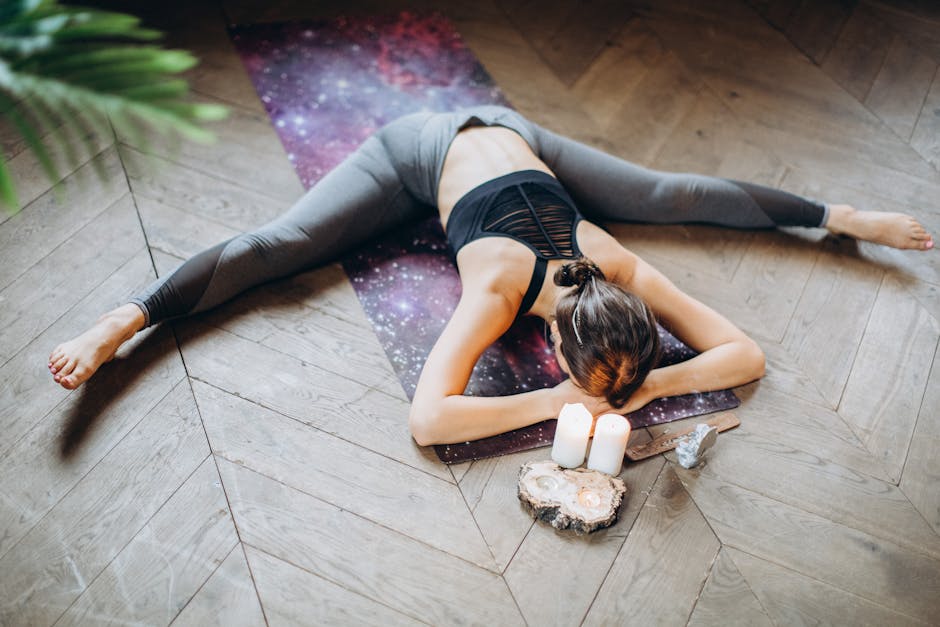
Yin Yoga, with its slow, meditative movements, and deep, held stretches, offers us a way to quiet the mind, and tune into the body. By targeting the deeper tissues of the body, such as the connective tissues, Yin Yoga helps to release physical tension, and promote a sense of relaxation and calm. The practice of Yin Yoga is based on the concept of “Prana” or life force, which flows through the body, and is often blocked by physical and emotional tension. By releasing these blockages, we can experience a sense of freedom, and a deeper connection to our inner self.
As we move through the poses, we can begin to feel a sense of calmness spreading through the body, like a gentle wave. The mind, too, begins to quiet, as we focus on the breath, and the sensations in the body. In this state, we can begin to access the wisdom of the heart, and tap into our own inner guidance. The heart, or “Hridaya” in Sanskrit, is seen as the seat of intuition, and the source of our deepest wisdom. By listening to the heart, we can gain a deeper understanding of ourselves, and the world around us.
Embracing the Feminine
In Yin Yoga, we often focus on the feminine principles of receptivity, and surrender. We allow ourselves to receive, to let go, and to trust in the natural flow of life. This is a powerful antidote to the fast-paced, driven culture that often dominates our lives. By embracing our own inner feminine, we can begin to cultivate a sense of nurturing, and self-care, that is essential for our well-being. The concept of “Shakti” or feminine power, is a central idea in the Tantras, which are a part of the Vedic scriptures. Shakti is seen as the dynamic, creative force that drives the universe, and is often depicted as a goddess, who embodies the qualities of strength, compassion, and wisdom.
As women over 40, we may be facing unique challenges, from menopause to caring for aging parents, or navigating the complexities of our own relationships. But in the midst of these challenges, we can find strength, and resilience, by tapping into our own inner feminine. We can learn to listen to our intuition, to trust our instincts, and to nurture our own inner wisdom. The goddesses of the Puranas, such as Durga, and Kali, remind us of the power of the feminine, and the importance of honoring our own inner goddess.
In Yin Yoga, we often work with the energy of the pelvic floor, and the lower abdomen, which is associated with the second chakra, or “Svadhisthana”. This energy center is linked to our emotions, our creativity, and our sense of self-worth. By releasing tension, and promoting relaxation in this area, we can begin to heal old wounds, and cultivate a sense of self-love, and self-acceptance. The concept of “Svadhisthana” is related to the idea of “Ahamkara” or the ego, which is seen as a major obstacle to self-realization. By releasing our attachment to the ego, we can begin to experience a sense of freedom, and a deeper connection to our true nature.
The Wisdom of the Body
As we practice Yin Yoga, we begin to listen to the wisdom of the body, and to trust in its innate intelligence. We learn to honor its limitations, and to respect its boundaries. This is a powerful lesson, that can translate into other areas of our lives, as we learn to listen to our intuition, and to trust our instincts. The body, or “Sharira” in Sanskrit, is seen as a temple, a sacred vessel that houses our spirit. By honoring the body, we can begin to experience a sense of reverence, and awe, for the miracle of life itself.
In the Bhagavad Gita, Lord Krishna reminds us that “the body is a temple, and the soul is the deity that dwells within”. This concept of the body as a temple, is a central idea in the Vedic tradition, and is often associated with the concept of “Puja” or worship. By honoring the body, we can begin to experience a sense of devotion, and a deeper connection to our own inner self.
As we move through the poses, we can begin to feel a sense of connection to our own inner wisdom, and to the natural world around us. We can begin to see the interconnectedness of all things, and to understand that we are not separate, but part of a larger web of life. The concept of “Advaita” or non-duality, is a central idea in the Vedic tradition, and is often associated with the concept of “Brahman” or the ultimate reality. By experiencing this sense of non-duality, we can begin to transcend our limited ego, and experience a sense of unity, and oneness with all of existence.
A Sense of Inner Peace
As we practice Yin Yoga, we can begin to experience a sense of inner peace, that is not dependent on external circumstances. We can learn to cultivate a sense of calm, and clarity, that is always available, no matter what challenges we may face. This is a powerful gift, that can transform our lives, and help us to navigate the complexities of the modern world. The concept of “Shanti” or peace, is a central idea in the Vedic tradition, and is often associated with the concept of “Moksha” or liberation. By experiencing this sense of peace, we can begin to transcend our limited ego, and experience a sense of freedom, and liberation.
In the stillness of the practice, we can begin to hear the whispers of our own heart, and to tap into our deepest wisdom. We can learn to trust in our own inner guidance, and to have faith in the natural flow of life. The concept of “Sraddha” or faith, is a central idea in the Vedic tradition, and is often associated with the concept of “Guru” or teacher. By having faith in our own inner guidance, we can begin to experience a sense of trust, and confidence, that is essential for our well-being.
As the practice comes to a close, we can take a moment to reflect on the wisdom that has arisen within us. We can acknowledge the challenges that we have faced, and the strengths that we have discovered. And we can carry this sense of peace, and clarity, with us, as we move back into our daily lives. The concept of “Vairagya” or detachment, is a central idea in the Vedic tradition, and is often associated with the concept of “Tyaga” or renunciation. By cultivating a sense of detachment, we can begin to experience a sense of freedom, and liberation, that is essential for our well-being.
As we go about our day, may we remember to breathe deeply, to trust in our own inner wisdom, and to cultivate a sense of inner peace. May we learn to listen to the whispers of our own heart, and to honor the wisdom of our own body. And may we always remember, that we are not alone, but part of a larger web of life, connected to all beings, and to the natural world around us. As the Bhagavad Gita reminds us, “the one who has realized the Self, is eligible to attain the state of supreme peace and liberation”. May we all experience this sense of peace, and liberation, in our own lives.