
Listen to this Article:
A Sanctuary for the Soul
As we navigate the complexities of modern life, it’s easy to overlook the spaces that nurture our deepest selves. The bedroom, a sanctuary for rest and rejuvenation, is often an afterthought in our chaotic daily lives. Yet, the ancient Vedic wisdom of Vastu Shastra teaches us that the colors we surround ourselves with can profoundly impact our well-being, relationships, and even our career. In the words of the Bhagavad Gita, “The one who has controlled the mind and senses, and has realized the Self, is eligible to attain the state of supreme peace and liberation.” As we explore the best colors for our bedroom according to Vastu, let us embark on a journey to create a sacred space that nurtures our body, mind, and spirit.
The concept of Vastu Shastra, which translates to “the science of architecture,” is rooted in the idea that our surroundings can either harmonize or disrupt the subtle energies that govern our lives. The Vastu experts of old believed that every color has a unique vibrational frequency, which can influence our mood, energy, and even our relationships. For instance, the color blue, or “neela” in Sanskrit, is often associated with the feeling of serenity and tranquility. It’s no wonder that the celestial sky, with its infinite expanse of blue, has been a symbol of the divine in many cultures. By incorporating blue hues into our bedroom, we can create a sense of calm and peacefulness, allowing our minds to unwind and recharge.
The Alchemy of Colors
As we delve into the world of Vastu, we begin to appreciate the subtle nuances of color and their effects on our psyche. The color green, or “harit” in Sanskrit, is said to promote balance and harmony, much like the soothing presence of nature. Imagine a forest glade, with its lush canopy and soft undergrowth, and you’ll begin to understand the tranquility that green can bring to our bedrooms. On the other hand, the color red, or “rakta” in Sanskrit, is associated with passion and energy, evoking the fierce beauty of a sunset or the warmth of a crackling fire. By carefully selecting the colors that surround us, we can create an environment that nurtures our deepest needs and desires.
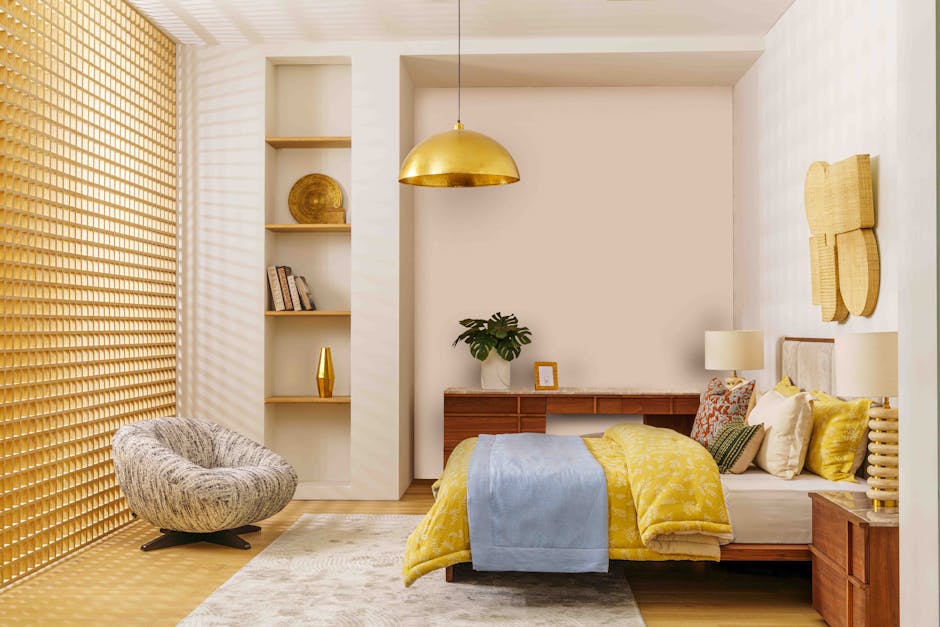
The Puranas, ancient Indian texts that contain stories and wisdom from the gods, offer us valuable insights into the mystical world of colors. According to these scriptures, the color yellow, or “peeta” in Sanskrit, is associated with the sun and the divine. Yellow is said to promote clarity and mental agility, much like the bright sunshine that illuminates our path. By incorporating yellow accents into our bedroom, we can cultivate a sense of optimism and confidence, allowing us to navigate life’s challenges with greater ease. As the Bhagavad Gita reminds us, “The one who has taken his birth, being determined by his association with the material modes of nature, is not free, but the one who has transcended these modes is liberated.”
The Dance of Light and Shadow
As we explore the realm of Vastu, we begin to appreciate the intricate dance of light and shadow that plays out in our bedrooms. The placement of mirrors, windows, and lighting can either enhance or disrupt the subtle energies that govern our space. For instance, a mirror placed opposite the bed can create a sense of self-reflection and introspection, allowing us to tune into our deepest thoughts and emotions. On the other hand, a window that allows natural light to flood the room can promote a sense of vitality and joy, connecting us to the rhythms of nature.
The concept of “prana” or life force, is central to the Vastu tradition. Prana is the vital energy that animates our bodies and surroundings, and its flow can be either harmonized or disrupted by our choices of color and design. By creating a bedroom that is attuned to the principles of Vastu, we can cultivate a sense of prana that nourishes our body, mind, and spirit. As the ancient Vedic seers knew, the subtle energies that govern our lives are intricately connected to the natural world. By tuning into the rhythms of nature, we can create a sanctuary that is truly a reflection of our deepest selves.
A Reflection of the Soul
As we create our bedroom sanctuary, we are, in essence, crafting a reflection of our deepest desires and aspirations. The colors, textures, and patterns we choose can either inspire or stagnate our growth, influencing the very fabric of our relationships and career. By embracing the wisdom of Vastu, we can transcend the mundane and enter a realm of profound beauty and meaning. As the Bhagavad Gita reminds us, “The one who has realized the Self, is eligible to attain the state of supreme peace and liberation.”
As we navigate the complexities of modern life, it’s easy to forget that our surroundings are a reflection of our inner world. The bedroom, a sanctuary for rest and rejuvenation, is a potent symbol of our deepest desires and aspirations. By embracing the ancient wisdom of Vastu, we can create a space that nurtures our body, mind, and spirit, allowing us to thrive in a world that often values productivity over peace. As the sun sets on another day, let us remember that the true beauty of life lies not in its external trappings, but in the depths of our own hearts. May our bedrooms be a reflection of our deepest selves, and may we always find peace in the sanctuary of our own souls.
Final thought for the day: As you drift off to sleep tonight, take a moment to appreciate the subtle energies that govern your bedroom. Allow the colors, textures, and patterns to whisper their secrets to your soul, and may you awaken to a new day filled with peace, harmony, and beauty.