
Hanuman Chalisa
श्रीगुरु चरन सरोज रज निज मन मुकुर सुधारि। बरनउँ रघुबर बिमल जसु जो दायकु फल चारि॥
बुद्धिहीन तनु जानिकै सुमिरौं पवनकुमार। बल बुधि बिद्या देहु मोहिं हरहु कलेस बिकार॥
जय हनुमान ज्ञान गुन सागर। जय कपीस तिहुँ लोक उजागर॥
राम दूत अतुलित बल धामा। अंजनि पुत्र पवनसुत नामा॥
महावीर विक्रम बजरंगी। कुमति निवार सुमति के संगी॥
कंचन बरन बिराज सुबेसा। कानन कुंडल कुंचित केसा॥
हाथ बज्र औ ध्वजा बिराजै। काँधे मूँज जनेऊ साजै॥
शंकर सुवन केसरी नंदन। तेज प्रताप महा जग बंदन॥
विद्यावान गुनी अति चातुर। राम काज करिबे को आतुर॥
प्रभु चरित्र सुनिबे को रसिया। राम लखन सीता मन बसिया॥
सूक्ष्म रूप धरी सियहिं दिखावा। बिकट रूप धरि लंक जरावा॥
भीम रूप धरि असुर सँहारे। रामचन्द्र के काज सँवारे॥
लाय सँजीवनि लखन जियाए। श्रीरघुबीर हरषि उर लाए॥
रघुपति कीन्हीं बहुत बड़ाई। तुम मम प्रिय भरतहि सम भाई॥
सहस बदन तुम्हरो जस गावैं। अस कहि श्रीपति कंठ लगावैं॥
सनकादिक ब्रह्मादि मुनीसा। नारद सारद सहित अहीसा॥
जम कुबेर दिक्पाल जहाँ ते। कबी कोबिद कहि सकैं कहाँ ते॥
तुम उपकार सुग्रीवहिं कीन्हा। राम मिलाय राजपद दीन्हा॥
तुम्हरो मन्त्र बिभीषन माना। लंकेश्वर भए सब जग जाना॥
जुग सहस्र जोजन पर भानू। लील्यो ताहि मधुर फल जानू॥
प्रभु मुद्रिका मेलि मुख माहीं। जलधि लाँघि गये अचरज नाहीं॥
दुर्गम काज जगत के जेते। सुगम अनुग्रह तुम्हरे तेते॥
राम दुआरे तुम रखवारे। होत न आज्ञा बिनु पैसारे॥
सब सुख लहै तुम्हारी शरना। तुम रक्षक काहू को डरना॥
आपन तेज सम्हारो आपै। तीनौं लोक हाँक ते काँपे॥
भूत पिशाच निकट नहिं आवै। महाबीर जब नाम सुनावै॥
नासै रोग हरै सब पीरा। जपत निरंतर हनुमत बीरा॥
संकट तें हनुमान छुड़ावै। मन क्रम बचन ध्यान जो लावै॥
सब पर राम तपस्वी राजा। तिन के काज सकल तुम साजा॥
और मनोरथ जो कोई लावै। सोहि अमित जीवन फल पावै॥
चारों जुग परताप तुम्हारा। है परसिद्ध जगत उजियारा॥
साधु संत के तुम रखवारे। असुर निकंदन राम दुलारे॥
अष्ट सिद्धि नौ निधि के दाता । अस बर दीन्ह जानकी माता॥
राम रसायन तुम्हरे पासा। सदा रहो रघुपति के दासा॥
तुम्हरे भजन राम को पावै। जनम जनम के दुख बिसरावै॥
अंत काल रघुबर पुर जाई। जहाँ जन्म हरिभक्त कहाई॥
और देवता चित्त न धरई। हनुमत सेइ सर्व सुख करई॥
संकट कटै मिटै सब पीरा। जो सुमिरै हनुमत बलबीरा॥
जय जय जय हनुमान गोसाईं। कृपा करहु गुरुदेव की नाईं॥
जो शत बार पाठ कर कोई। छूटहि बंदि महा सुख होई॥
जो यह पढ़ै हनुमान चालीसा। होय सिद्धि साखी गौरीसा॥
तुलसीदास सदा हरि चेरा। कीजै नाथ हृदय महँ डेरा॥
पवनतनय संकट हरन मंगल मूरति रूप। राम लखन सीता सहित हृदय बसहु सुर भूप॥
Introduction to Hanuman Chalisa
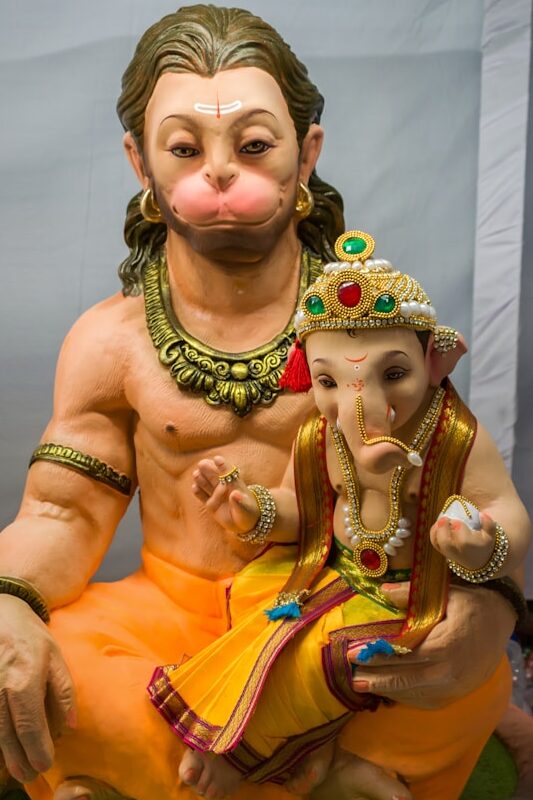
Hanuman Chalisa is a sacred Hindu hymn that has been a cornerstone of devotion and spiritual growth for centuries. Composed by the 16th-century poet Tulsidas, this 40-verse poem is a tribute to the unwavering dedication and selfless service of Lord Hanuman, the revered monkey deity and loyal companion of Lord Rama. The Hanuman Chalisa is deeply rooted in the scriptural traditions of Hinduism, drawing inspiration from the Vedas, Puranas, Upanishads, and Itihasa (Ramayana/Mahabharata).
Scriptural Origin of Hanuman Chalisa
The Hanuman Chalisa is firmly grounded in the scriptural traditions of Hinduism. The concept of Hanuman as a symbol of devotion, strength, and wisdom is deeply rooted in the Ramayana, one of the most sacred Itihasa (epics) of Hinduism. The Ramayana narrates the story of Lord Rama, the seventh incarnation of Lord Vishnu, and his loyal companion Hanuman, who embodies the ideals of dharma (righteousness), bhakti (devotion), and seva (selfless service). The Hanuman Chalisa also draws inspiration from the Puranas, which provide a detailed account of Hanuman’s life, exploits, and spiritual significance. The Upanishads, which form the philosophical foundation of Hinduism, also influence the spiritual themes and concepts explored in the Hanuman Chalisa.
Lyrics and Structure of Hanuman Chalisa
The Hanuman Chalisa consists of 40 verses, each of which is a masterpiece of poetic expression and spiritual insight. The hymn is divided into several sections, each of which explores a different theme or aspect of Hanuman’s character and spiritual significance. The lyrics of the Hanuman Chalisa are written in Awadhi, a dialect of Hindi, and are characterized by their simplicity, clarity, and depth. The hymn begins with an invocation of Lord Hanuman, followed by a description of his physical appearance, his role as a servant of Lord Rama, and his spiritual significance as a symbol of devotion and selfless service.
Word Meaning and Spiritual Significance
Each verse of the Hanuman Chalisa is a treasure trove of spiritual insight and philosophical wisdom. The hymn explores a wide range of themes, including the nature of the divine, the importance of devotion and selfless service, and the path to spiritual liberation. Some of the key words and phrases in the Hanuman Chalisa include:
- Shri Guru Charan Saroj Raj: This phrase, which appears in the opening verse of the Hanuman Chalisa, refers to the lotus feet of the guru, which are considered a symbol of spiritual guidance and wisdom.
- Nij Man Mukur Sudhari: This phrase, which appears in the second verse, refers to the importance of purifying the mind and intellect in order to attain spiritual growth and self-realization.
- Asthak Pradhan Paath Karo: This phrase, which appears in the seventh verse, refers to the importance of reciting the Hanuman Chalisa as a means of attaining spiritual growth and self-realization.
Ritual Vidhi (Worship Procedure)
The Hanuman Chalisa is typically recited as part of a larger ritual or worship procedure, which includes:
- Puja (worship): The recitation of the Hanuman Chalisa is often accompanied by the offering of flowers, fruits, and other items of worship to Lord Hanuman.
- Arati (lamp offering): The recitation of the Hanuman Chalisa is often accompanied by the offering of a lamp, which symbolizes the light of knowledge and spiritual guidance.
- Pranam (prostration): The recitation of the Hanuman Chalisa is often accompanied by prostration, which symbolizes humility and devotion.
Phala Shruti (Benefits)
The Hanuman Chalisa is believed to confer a wide range of spiritual and material benefits, including:
- Spiritual growth and self-realization: The recitation of the Hanuman Chalisa is believed to help the devotee attain spiritual growth and self-realization.
- Protection from evil: The recitation of the Hanuman Chalisa is believed to offer protection from evil spirits, negative energies, and other forms of harm.
- Healing and wellness: The recitation of the Hanuman Chalisa is believed to have healing properties, and is often recited as a means of promoting physical and mental well-being.